Cuyutlán is a word that names two things: a coastal village in the state of Colima, and the sea salt harvested there since 1531. Both share the same stubbornness. The village did not grow toward tourism; the salt did not seek industry. What reaches the table is exactly what reached the basket-weaver almost five centuries ago.
Dawn decides the texture
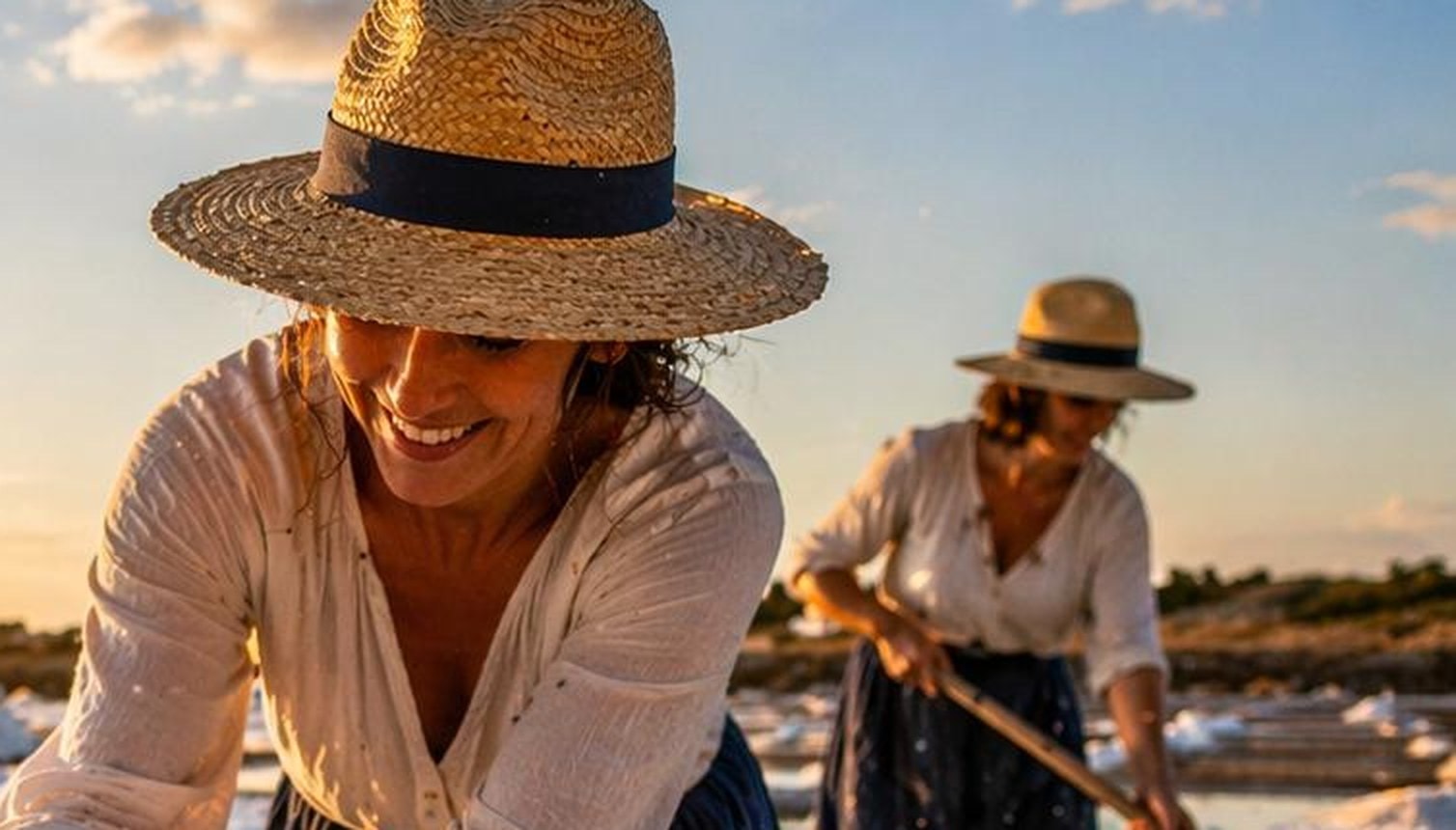
Fleur de sel is not made; it is gathered. When the Pacific wind drops between 8 and 12 km/h, when the temperature has yet to break 26°C, and when air humidity hovers around 70%, a translucent layer floats above the evaporation pans. Harvesters lift it with wooden paddles, never touching the water beneath. The crystal stays hollow, light, with a texture that crackles between the fingers before dissolving on the plate.
If the wind picks up beyond 12 km/h, the crystals break. If humidity drops below 60%, they never float. If the sun hits before the harvest, the salt sinks and hardens. Some days no harvest happens at all. That invisible selection of hours and weather is what separates Cuyutlán fleur de sel from supermarket imitations bearing the same name.
The craft that takes its time
Don Genaro is 71. His father harvested salt before him, and his grandfather before his father. He speaks about the craft the way others speak about reading: a daily practice that, if you abandon it for a month, shows. The angle of the paddle on the pan requires a specific tilt (17 degrees, he says, though he never measured it) so the bloom rises without dragging the brackish water below.
“Salt is not taught with words. It is taught with days.”
Don Genaro, harvester
At Albye we work with two family cooperatives that maintain the old method. We do not buy by volume; we buy by season. The good harvest runs from February to May, when the Pacific wind stabilizes. The rest of the year the pans rest or produce common table salt that goes to other channels.
How to use it in the kitchen
The simple rule: fleur de sel goes on at the end, never before. Sustained heat dissolves it and erases what makes it unique, the hollow crystal that crackles. Sprinkle it over the seared steak, over the freshly cut ripe tomato, over the butter on warm bread. And use it sparingly. A pinch per serving, no more; what it adds is not salt, it is texture and a mineral echo that lasts a single second in the mouth.
The most common mistake is to treat it like table salt: in pasta water, in stock, in brine. There is ground sea salt for those uses at a fraction of the price. Fleur de sel is a finishing ingredient; it loses its reason for being if the moment of application is not respected.
It is a salt that demands attention. Whoever uses it three times a week quickly understands why a four-ounce jar lasts four months, and why by the fourth jar they no longer want any other. The difference is invisible in a photograph, but permanent on the table.